This is Bodong Chen.
I am an associate professor in Learning Sciences and Technologies at the University of Pennsylvania Graduate School of Education. My research is at the intersection of the learning sciences, learning analytics, and network science. As a learning scientist and educational technologist, I strive to make learning a meaningful part of social participation for people of all backgrounds and circumstances. My scholarly inquiry integrates knowledge media design, software engineering, and data science methods to continually improve infrastructures for learning. Guided by design-based research and participatory design approaches, I aim to generate justice-oriented pedagogical designs, technological innovations, and empirical understandings of learning in authentic settings.
I sit on the editorial boards of a number of journals, including The Internet and Higher Education, and I was elected to the Executive Committee of the Society for Learning Analytics Research (SoLAR) and the Computer-Supported Collaborative Learning (CSCL) Committee of the International Society of the Learning Sciences (ISLS). I also served as a program chair of the CSCL Conference of the 2022 ISLS Annual Meeting, and co-chaired the ISLS Membership Committee and the SoLAR Website Working Group.
Before joining Penn GSE, I was an associate professor in the College of Education and Human Development and co-director of the Learning Informatics Lab at the University of Minnesota.
Random Thoughts
Network Motifs as Codes
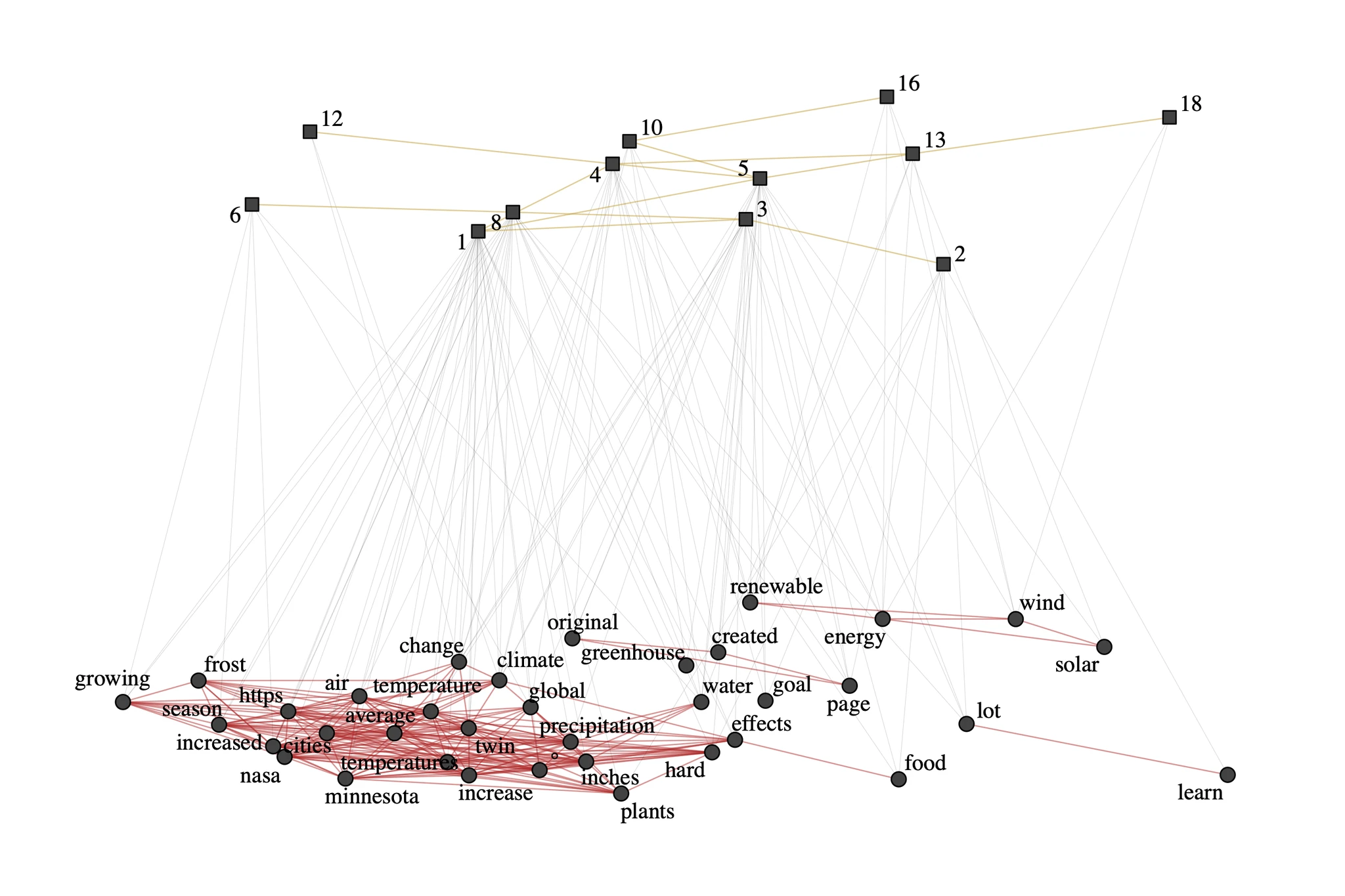
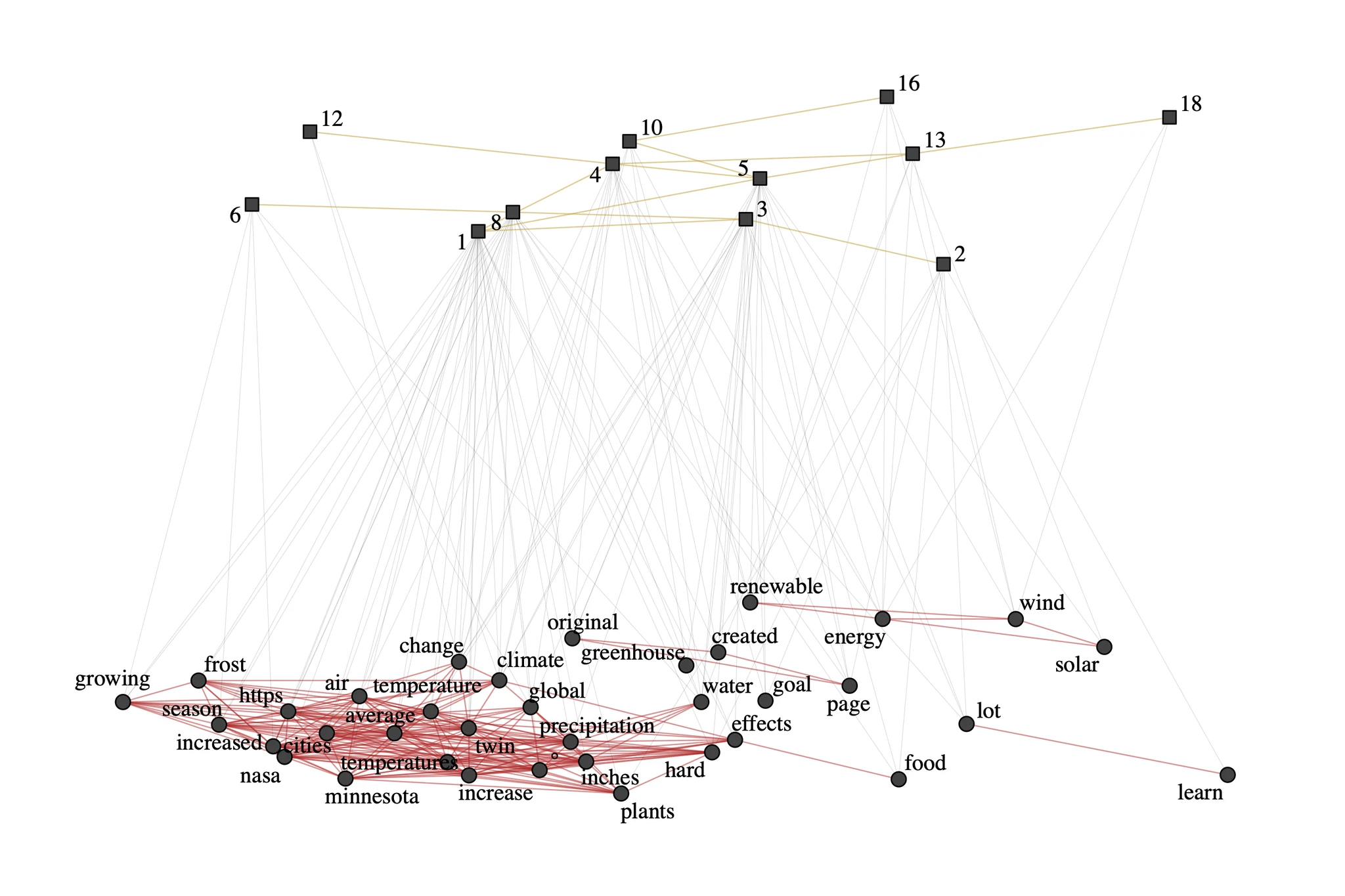
I’ve been working on a framework of applying socio-semantic network analysis to discourse data. Socio-semantic networks are two-mode, dual-layer networks that are made of actors (e.g., learners), semantic entities (e.g., words), and their relations. Socio-semantic network analysis brings together the study of relations among actors (human networks), relations among semantic elements (semantic networks), and relations among these two orders of networks (Basov et al., 2020). Such a dual-layer network analysis approach is not only useful for examining the duality of socio-semantic relations, it also applies to other settings such as socio-ecological analysis that’s interested in the interactions between social structures and ecological resources (Bodin & Tengö, 2012).
Read moreProjects
Knowledge Building Infrastructures

Researching and promoting the Knowledge Building theory of learning, pedagogy, and technology.
Read morePublications
Learning Analytics for Understanding and Supporting Collaboration

Abstract Collaboration is an important competency in the modern society. To harness the intersection of learning, work, and collaboration with analytics, several fundamental challenges need to be addressed. This chapter about collaboration analytics aims to highlight these challenges for the learning analytics community. We first survey the conceptual landscape of collaboration and learning with a focus on the computer-supported collaborative learning (CSCL) literature while attending to perspectives from computer supported cooperative work (CSCW).
Read moreRecent Talks
ISLS22 - Connectivity for Knowledge Building: A Framework of Socio-Semantic Network Motif Analysis
个人中文博客
2022-04-26 每日自问


Bodong Chen
Lifelong Kindergartener
- Learning Futures Group
- Learning Informatics Lab